
Aula para a turma · Bamiyan Valley · 🇦🇫 Afghanistan

Bamiyan Valley

A red-cliffed valley where ancient carvers left giant niches in the rock

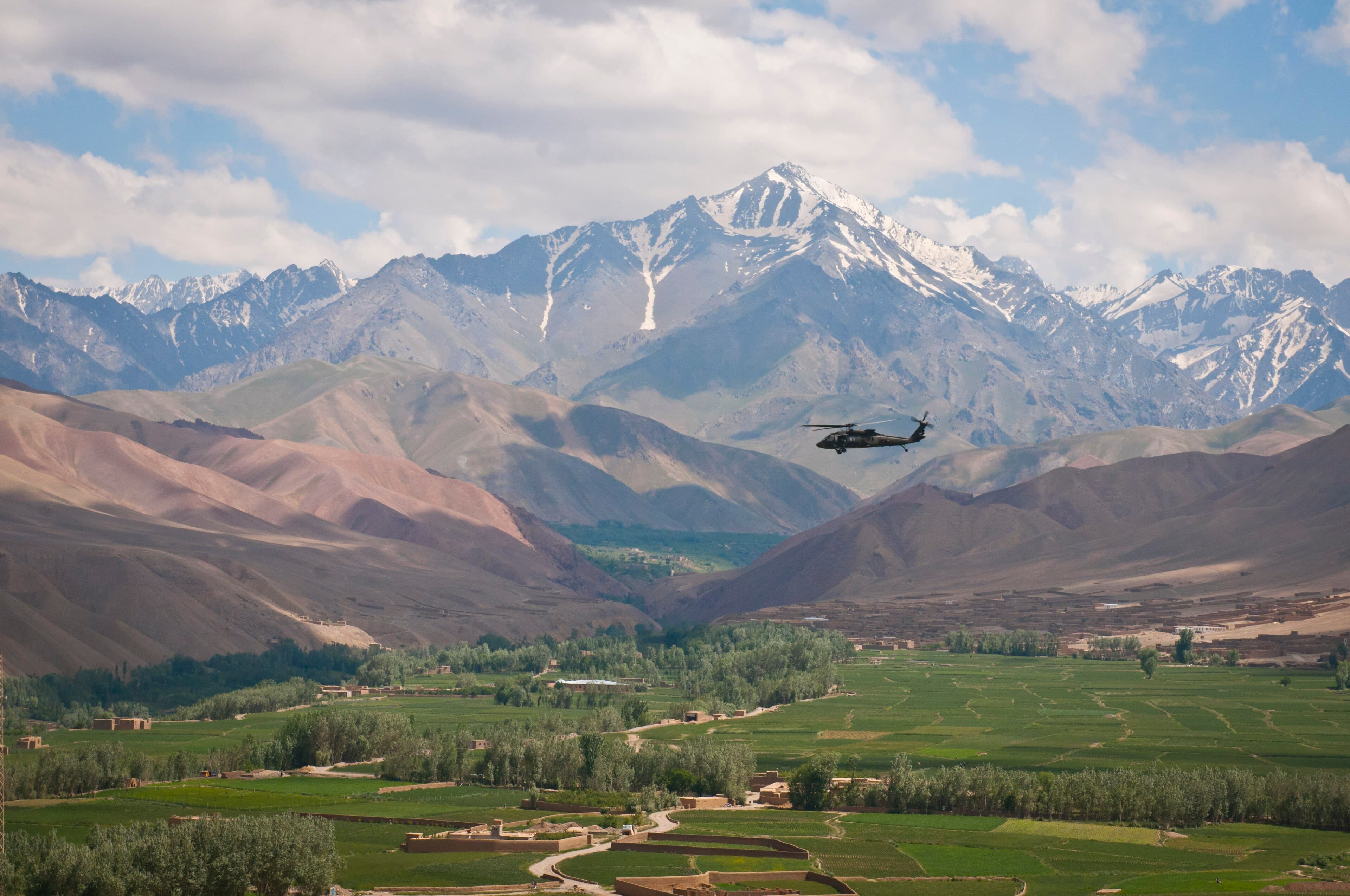
The red sandstone cliffs of Bamiyan valley with enormous carved niches visible in the rock face

Photo · Wikimedia Commons

O que é isso?

Bamiyan is a wide, peaceful valley in central Afghanistan, ringed by red and orange sandstone cliffs. Carved into those cliff faces are two enormous empty niches - arched hollows shaped by craftspeople more than 1,500 years ago. The valley is surrounded by some of the most colourful mountain scenery in the country.

Me conte mais

For hundreds of years, Bamiyan sat along the ancient Silk Road - the great network of trade routes linking China with the Mediterranean. Merchants, artists and scholars passed through, and a thriving community settled in the valley. The craftspeople who carved into the cliffs were extraordinarily skilled, creating niches so large that the smallest was 38 metres tall and the largest was 55 metres - about the height of a 15-storey building.

The red and ochre cliffs themselves are made of a soft stone called sandstone, which is easier to carve than granite or marble. Over the centuries, people also carved networks of caves into the cliffs, which became homes, storerooms and meeting places. Some caves still have faded painted decorations on their walls that archaeologists study today.

The valley floor sits at about 2,500 metres above sea level and is surrounded by snowy peaks. In spring, the fields below the cliffs turn bright green with new crops, and local people hold outdoor markets. The Band-e-Amir lakes are not far away, so visitors sometimes travel between the two in a single day, moving from the carved red cliffs to the electric-blue water.

Na sala de aula

Conduza sua turma por isso em 15 minutos.

Conversem juntos

Sugestões de discussão

  1. 01Imagine you are an artist given a cliff face as your canvas. What would you choose to carve, and why?
  2. 02The Silk Road brought traders and ideas from many different countries to Bamiyan. What kinds of things might travellers have swapped or shared as they passed through?
  3. 03Why do archaeologists study old paintings and carvings? What can they tell us?
  4. 04The niches are empty now. If you could design something to fill one, what would you choose and what material would you use?
Experimente isso

Atividade para a turma

Using air-dry clay or soap bars, practise carving a simple arch-shaped niche with a wooden skewer or pencil. Notice how much effort even a small hollow takes. Then calculate: if carving 1 centimetre takes you 5 minutes, roughly how long would carving a 55-metre niche take? (Hint: convert metres to centimetres first.)