
Leçon en classe · Yennayer - the Amazigh New Year · 🇩🇿 Algeria

Yennayer - the Amazigh New Year

A 3,000-year-old New Year celebrated on 12 January

A traditional Yennayer feast with seven-vegetable couscous and decorated bread on a colourful table

Photo · Wikimedia Commons

Qu'est-ce que c'est ?

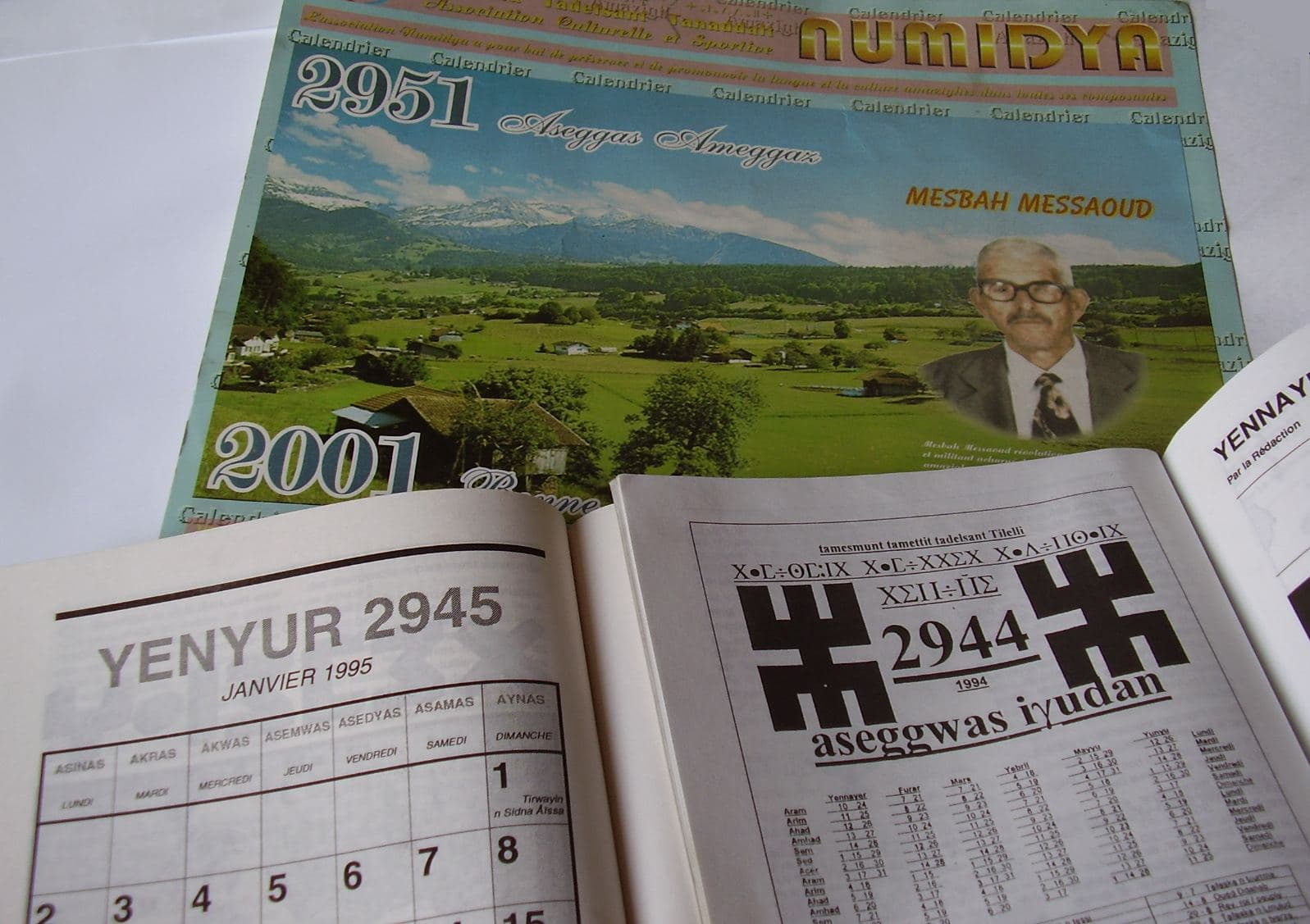
Yennayer is the New Year of the Amazigh people, who have lived in North Africa for thousands of years. It is celebrated every year on 12 January - the start of a new farming year. The year number is amazing: in 2026, the Amazigh New Year marks the year 2976. So Amazigh time-keeping is older than the calendar you have at school by nearly 1,000 years.

En savoir plus

Yennayer is a family festival. Houses are cleaned, fresh bread is baked, and a big special meal is shared. The most traditional Yennayer dish is a couscous topped with seven different vegetables - one for each day of the week. Seven is seen as a lucky number that brings a good harvest for the new year.

Children play a big part. In some Amazigh communities, on the evening of Yennayer, a child is given a haircut for the first time - a way of marking their growing up. Other families let children dig into a special bowl of nuts, dried figs, sweets and grains to grab a handful with both hands - the more you grab, the more good fortune you'll have.

Yennayer is especially celebrated in the Amazigh-speaking regions of Algeria - Kabylia, the Aurès Mountains, and the M'zab Valley. Children learn songs in Tamazight, the Amazigh language. In 2018, Yennayer became an official public holiday across all of Algeria.

Yennayer is also a chance to celebrate Amazigh culture more widely - colourful traditional clothes, jewellery decorated with silver coins, hand-woven rugs and old stories told by grandparents around the table. It is a moment for children to feel proud of being part of one of the oldest cultures in the world.

En classe

Animez cette leçon avec votre classe en 15 minutes.

Discutez-en ensemble

Pistes de discussion

  1. 01What's the difference between a 'new year' and 'the' new year? Could a country have more than one?
  2. 02Why might starting a new year on a farming date make sense in some places more than others?
  3. 03What food does your family eat at the start of a new year?
À essayer

Activité en classe

Each pupil draws their own 'Yennayer table' - a big platter at the centre and seven different vegetables around it. Then they choose seven 'wishes' to write on tiny paper labels, one for each vegetable. Read them out as a class.