
Leçon en classe · Wildlife · 🇨🇲 Cameroon

Drill Monkey

The colourful, endangered primate of Cameroon's forests

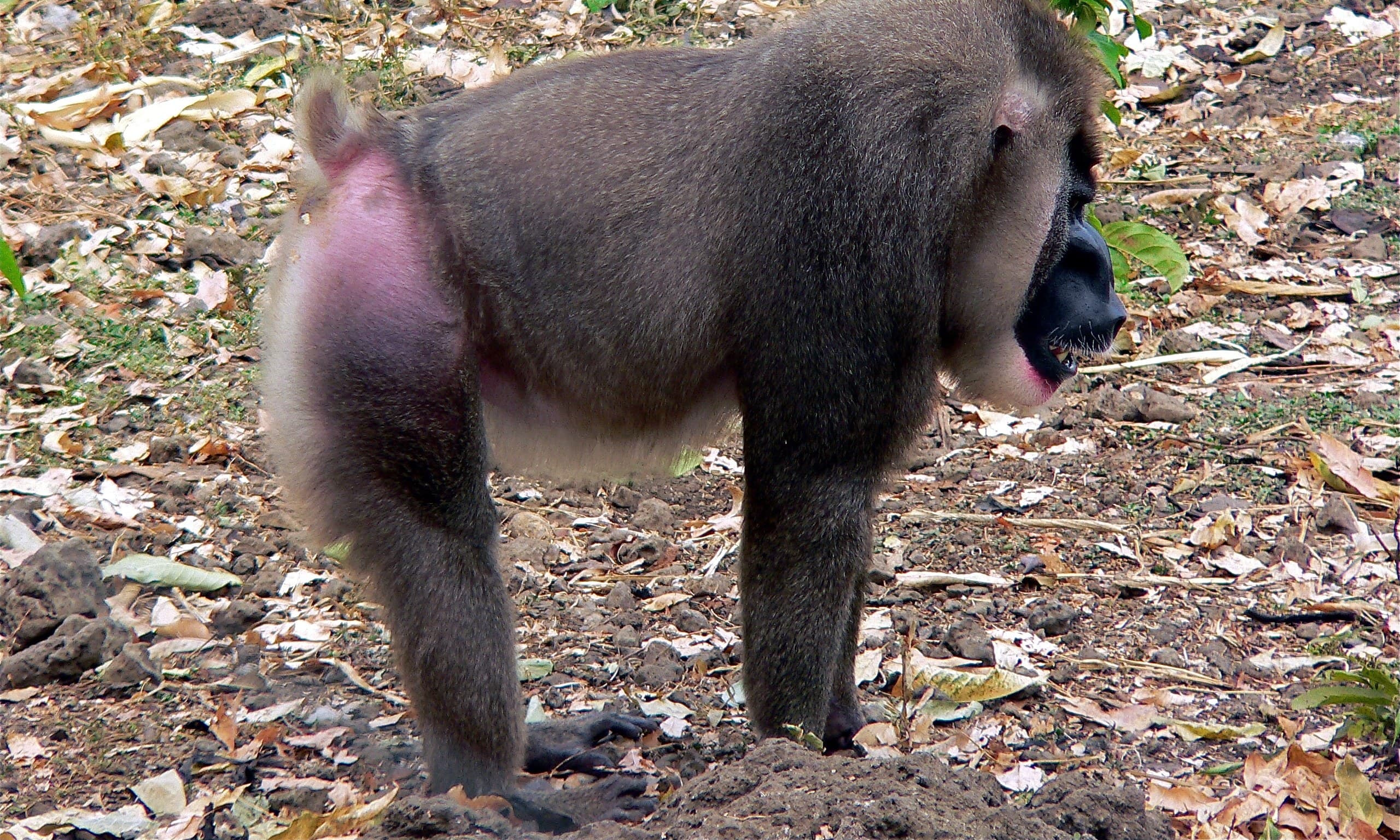
A drill monkey with a colourful red and blue face sitting in forest undergrowth

Photo · Wikimedia Commons

Qu'est-ce que c'est ?

The drill is a large, striking monkey found in the rainforests of south-west Cameroon, Nigeria and the island of Bioko. Males have one of the most spectacular faces in the animal kingdom - bright red, blue and pink colouring on their chins and lower faces. Drills live in large groups and are closely related to the more well-known mandrill.

En savoir plus

Male drills are much larger than females and can weigh up to 30 kilograms. Their colourful face markings are used to communicate - a brighter face is a sign of a stronger, healthier male, and females tend to prefer males with the most vivid colours. The males also use expressions and postures to show dominance, calm other group members, or signal danger.

Drills are social animals that live in large groups called hordes, sometimes containing 100 or more individuals. Inside a horde, smaller family units of one male and several females stick close together. The groups travel together through the forest, foraging for fruit, seeds, fungi, insects and small animals. Their calls - booming and surprisingly loud - help keep the group in contact.

Drill monkeys are an important species for the forest because they spread seeds as they move around eating fruit. They are also what scientists call an 'indicator species' - if drills are thriving in a forest, it usually means the forest itself is in good health. When their numbers drop, it often signals a wider problem with the ecosystem.

Drills are listed as endangered and are found in few places in the world. The Limbe Wildlife Centre in Cameroon cares for rescued drills and runs a breeding programme to help the species recover. Visitors to the centre can watch drills in large forested enclosures and learn about the conservation work being done to protect them.

En classe

Animez cette leçon avec votre classe en 15 minutes.

Discutez-en ensemble

Pistes de discussion

  1. 01Why do you think bright colours in animals often signal strength or good health?
  2. 02Drills live in very large groups. What are the advantages of living in a big group in a forest?
  3. 03What is an 'indicator species' and why might scientists use animals to measure the health of a forest?
  4. 04How does a wildlife rescue centre help protect a species that is endangered?
À essayer

Activité en classe

Design your own primate face! Choose a colour for each feature: forehead, cheeks, nose, chin, and eyes. Research why primates have colourful markings and write one sentence explaining what each colour on your design 'means' (for example: 'Blue chin = this male is calm and friendly'). Share your design with the class.

En savoir plus sur Cameroon

D'autres choses qui rendent Cameroon spécial

Envie que votre classe rencontre Cameroon ?

Choisissez Cameroon lors de votre inscription et nous vous indiquerons la faisabilité en matière de fuseau horaire.

Register your classroom