
Bài học lớp học · Wildlife · 🇬🇼 Guinea-Bissau

Saltwater Hippopotamus

One of the rarest animals in the world lives on the Bijagós islands

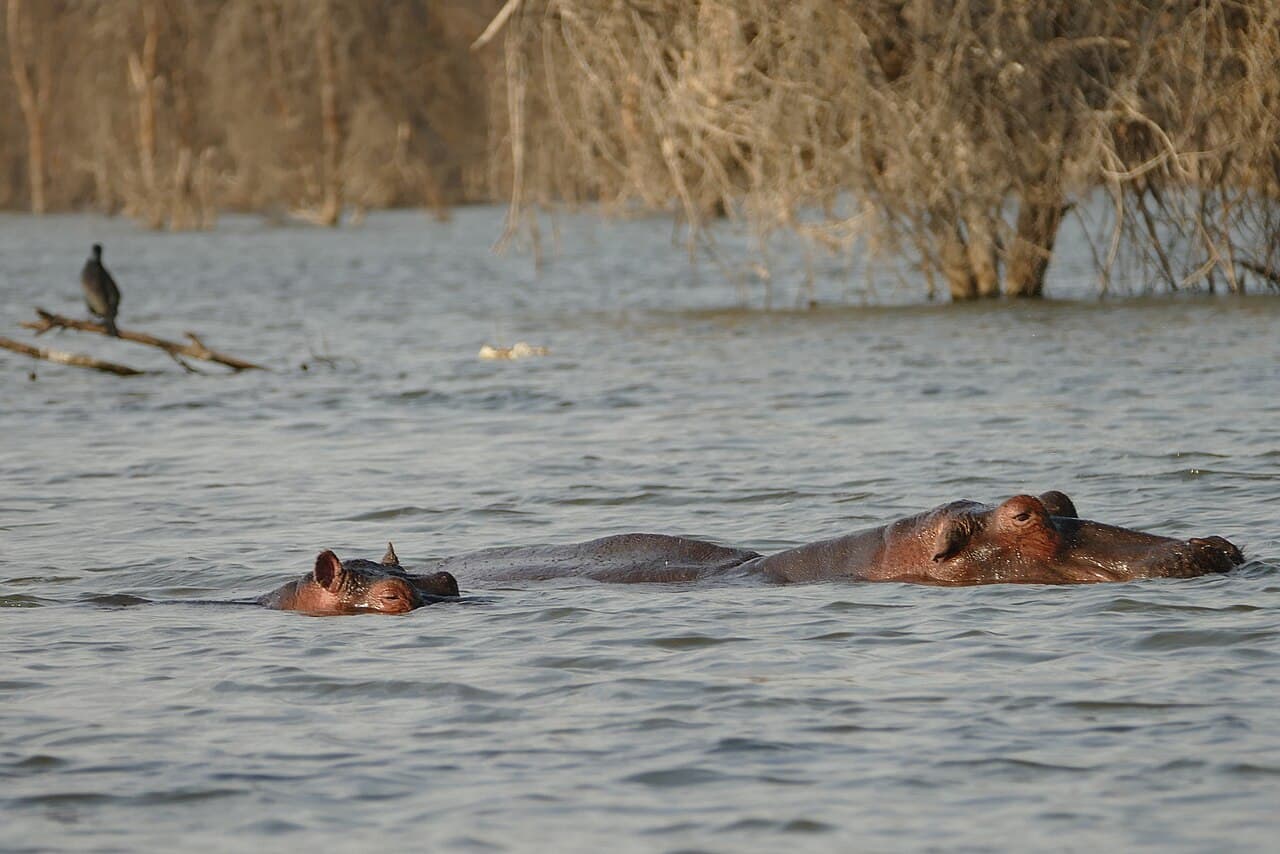
A hippopotamus resting at the edge of a mangrove estuary in the Bijagós islands

Photo · Wikimedia Commons

Đây là gì?

Most hippopotamuses live in freshwater rivers and lakes - but the hippos of the Bijagós Archipelago have learned to live in salty ocean water. They swim between the islands through the sea, eating sea plants and resting in the mangrove estuaries. This makes them some of the rarest and most unusual hippos on Earth.

Kể thêm cho tôi nghe

Hippopotamuses are huge - an adult can weigh as much as three small cars. Despite their size they are surprisingly graceful in the water, where they spend most of the day keeping cool. Their skin produces a natural pinkish liquid that acts like a sunscreen and keeps bacteria away - scientists sometimes call it 'blood sweat', though it is neither blood nor sweat.

The Bijagós hippos are unusual because they regularly enter and swim in the sea. Most hippos would not survive salty water for long, but these animals have adapted over many generations. They swim between islands at night and can cover several kilometres through open water. Nobody is entirely sure how they navigate, but they always find their way.

Hippos are herbivores - they eat only plants. At night they come ashore to graze on grasses and other vegetation, walking surprisingly far inland in a single night. In the morning they return to the water, sometimes with mud coating their backs where they wallowed.

The saltwater hippos of the Bijagós are considered a very special population by conservationists. Their numbers are small, which makes each individual animal important. The Bijagó people who share the islands with them have lived alongside hippos for centuries and have their own deep knowledge of the animals' habits and movements.

Trong lớp học

Hướng dẫn lớp của bạn qua bài này trong 15 phút.

Cùng nhau trò chuyện

Gợi ý thảo luận

  1. 01Most hippos live in freshwater - why do you think the Bijagós hippos learned to swim in the sea instead?
  2. 02What is an adaptation? Can you think of an animal near your school that has adapted to its environment in an interesting way?
  3. 03Hippos are very large but mostly eat plants. Does that surprise you? What other large animals are herbivores?
Hãy thử điều này

Hoạt động lớp học

Create a 'Hippo Fact File' booklet. Each page covers one fact: size, diet, skin, swimming, and the Bijagós. Children illustrate each page and write one sentence in their own words. Compile the class's booklets into a display.

Tìm hiểu thêm về Guinea-Bissau

Những điều khác khiến Guinea-Bissau trở nên đặc biệt

Muốn lớp của bạn gặp gỡ Guinea-Bissau?

Chọn Guinea-Bissau khi đăng ký và chúng tôi sẽ cho bạn biết khả năng phù hợp về múi giờ.

Register your classroom