
Pelajaran bilik darjah · Festival · 🇭🇺 Hungary

Csárdás Dance

Hungary's lively folk dance - starting slow, then spinning faster and faster

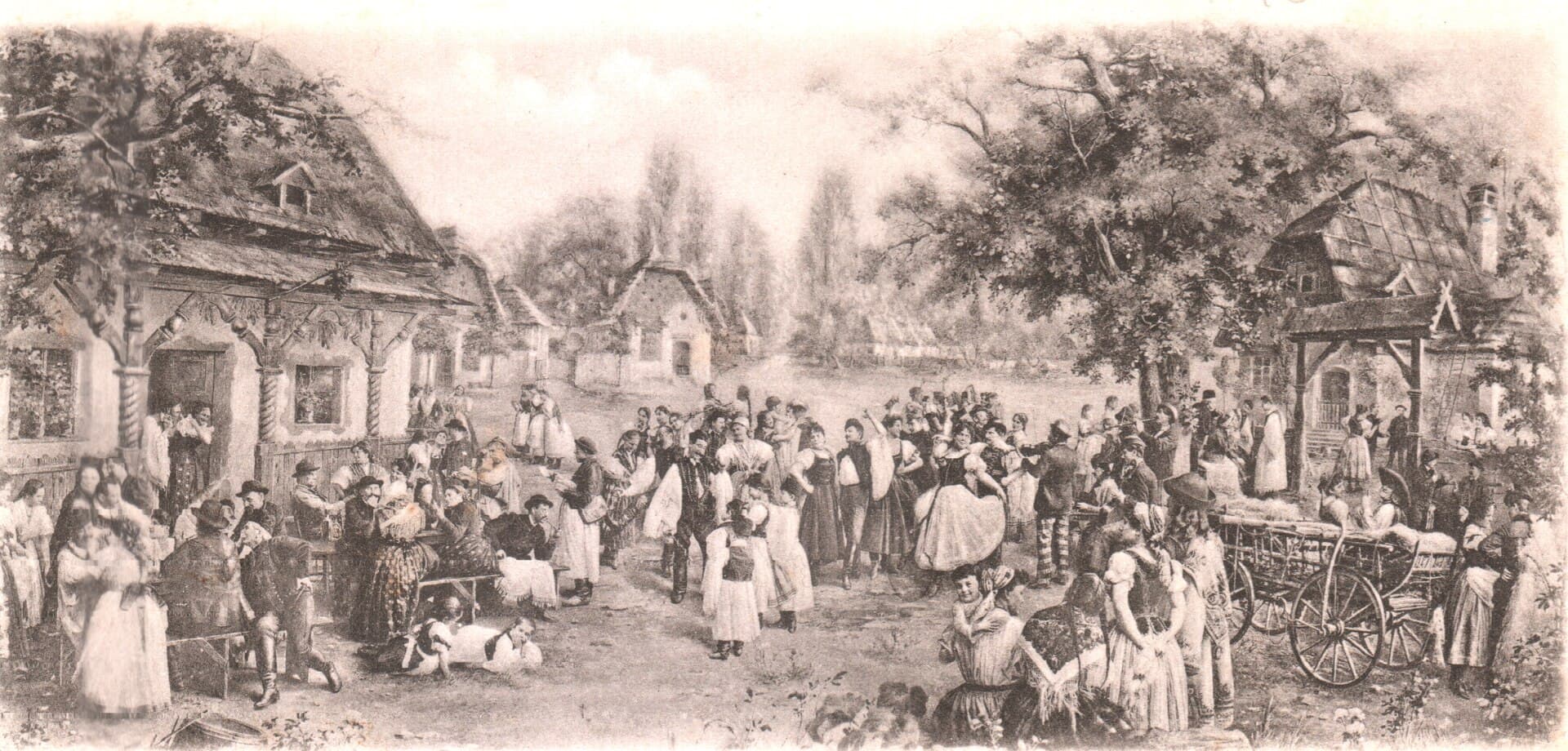
Hungarian folk dancers in bright embroidered costumes performing the csárdás

Photo · Wikimedia Commons

Apakah itu?

The csárdás (say: CHAR-dash) is Hungary's most famous folk dance. It is performed in pairs and has a magical structure: it always begins slowly and gently, then gradually builds speed until the dancers are spinning and stamping at an exhilarating pace. The music speeds up, the feet move faster and faster, and by the end everyone - dancers and audience alike - is breathless and smiling.

Beritahu saya lebih lanjut

The csárdás has two main parts. The first part, called lassú (slow), is graceful and measured - the couple moves together in smooth circles, the woman's skirt swaying gently. The second part, called friss (fast), is where it all takes off - the tempo doubles and the couple spins, stamps and leaps. The shift from slow to fast is one of the most exciting moments in any folk dance.

The costumes for csárdás dancing are spectacular. Women wear wide, brightly coloured skirts - often red, blue or white - that flare out beautifully when they spin. Men wear tight black or white trousers, embroidered waistcoats and black boots with metal-tipped heels that ring out when they stamp on the dance floor.

Csárdás is not just for professionals - it is a dance that ordinary Hungarians have done at weddings, festivals and celebrations for over 200 years. At a Hungarian village wedding, it would be unusual if the csárdás was not danced late into the night.

The composer Franz Liszt - who was Hungarian - included the rhythms of the csárdás in some of his most famous piano pieces. Vittorio Monti's 'Czardas' (the Italian spelling) became one of the most performed violin pieces in the world. The dance's energy inspired musicians across Europe.

Di dalam bilik darjah

Bimbing kelas anda melalui ini dalam 15 minit.

Bercakap bersama

Petunjuk perbincangan

  1. 01The csárdás builds from slow to fast. Why do you think this structure makes it exciting to watch?
  2. 02Folk dances are often danced at celebrations. What dances do people in your family or community do at celebrations?
  3. 03Music and dance are connected in the csárdás - the music speeds up to drive the dance. Can you think of music that makes you want to move faster?
Cuba ini

Aktiviti bilik darjah

In the classroom, try a mini-csárdás in pairs. Walk in a slow circle together for 16 counts (lassú), then jog in a circle for 16 counts (friss), then stop. Repeat - going a little faster each time in the friss section. Afterwards, draw the path your feet made on paper, showing the difference between the slow careful steps and the fast spinning ones.