
Pelajaran kelas · Music · 🇰🇬 Kyrgyzstan

Komuz

Kyrgyzstan's three-string lute - the sound of the steppe

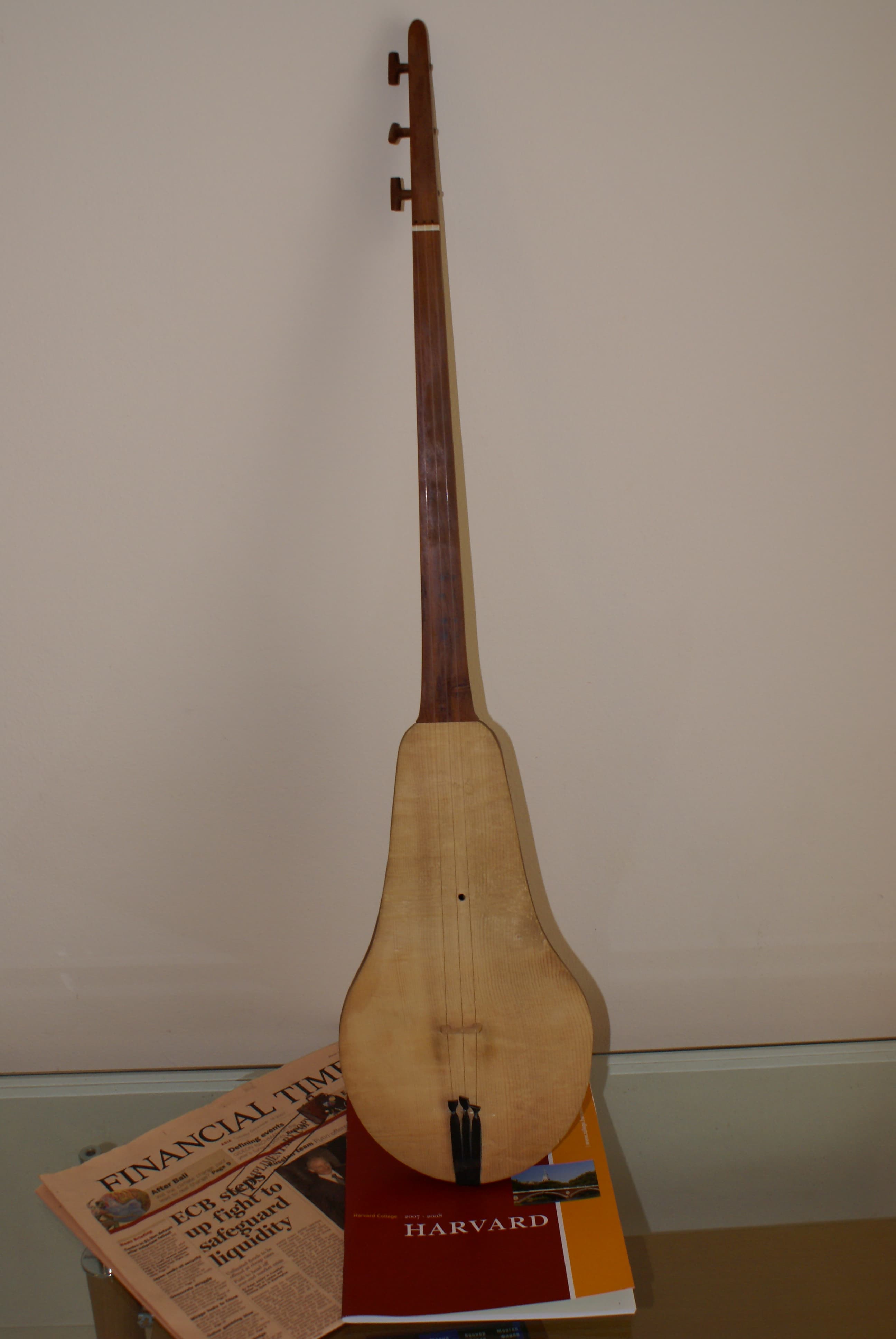
A wooden komuz three-string lute held in a musician's hands

Photo · Wikimedia Commons

Apa itu?

The komuz is a small three-string instrument that is one of the oldest and most beloved in Kyrgyzstan. It is shaped a bit like a pear or a teardrop, carved from a single piece of wood, with three strings made from twisted sinew. When a skilled player plucks or strums the komuz, it can make a surprisingly wide range of sounds - from rippling water to horse hooves to the wind across a mountain meadow.

Ceritakan lebih lanjut

The komuz has been played by Kyrgyz people for over 2,000 years. It is a small, light instrument that nomadic people could easily carry on horseback across the steppe and up into the mountains. Because it is carved from a single piece of wood rather than glued together in parts, it is also very sturdy - it does not crack or warp in extreme cold or heat.

Komuz players are often asked to imitate the sounds of nature - a galloping horse, a river, the wind, or the call of a bird. Skilled players do this with rapid finger movements on the strings and by lightly touching parts of the strings to create different tones. It can sound almost like several instruments playing at once.

Traditionally, the komuz was played by minstrel storytellers called akyn, who would travel from village to village, playing their instrument and singing poems and stories - including parts of the great Manas epic. The komuz and the voice go together beautifully in Kyrgyz music.

Today, Kyrgyz children can learn komuz at music schools, and it is played at celebrations, festivals and concerts across the country. It has also been recognised internationally - UNESCO lists traditional Kyrgyz komuz music among the world's important cultural heritage.

Di dalam kelas

Pandu kelas Anda melalui ini dalam 15 menit.

Bicarakan bersama

Pertanyaan diskusi

  1. 01The komuz was designed for travelling nomads who needed a light, tough instrument. How does the way people live affect the musical instruments they invent?
  2. 02Komuz players imitate natural sounds like rivers and horses. If you were writing music about your environment, what sounds would you want to put in it?
  3. 03Before books and phones, storytellers with instruments carried stories from village to village. Why was that so important? How would villages know about events elsewhere without them?
Coba ini

Kegiatan kelas

Listen to a short clip of komuz music (your teacher can find one online). Then close your eyes and listen again. Draw or write the images that come into your mind as you listen. Do you hear water? Wind? Horses? Compare what different classmates imagined. Did the music take everyone to the same place?