
Lección en el aula · Wildlife · 🇲🇷 Mauritania

Saharan Cheetah

The world's rarest and most mysterious big cat

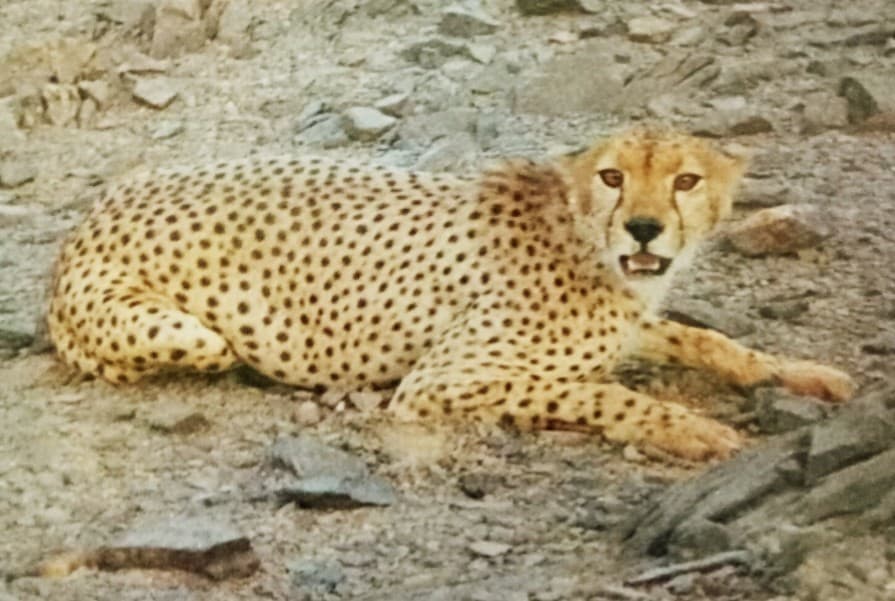
A pale Saharan cheetah resting on a rock in a rocky desert landscape

Photo · Wikimedia Commons

¿Qué es?

The Saharan cheetah is one of the rarest animals on Earth - a pale, secretive big cat that roams the remote desert regions of Mauritania and a few neighbouring countries. Unlike the spotted cheetahs of eastern Africa that you might see in wildlife films, the Saharan cheetah has faded spots and lives mostly at night, making it incredibly hard to spot.

Cuéntame más

Scientists estimate there are fewer than 250 Saharan cheetahs left in the wild. They are so shy and live in such remote areas that most of what we know about them comes from camera traps - cameras left in the desert triggered by movement - rather than direct observation. Spotting one is incredibly rare even for expert researchers.

Their pale, cream-coloured coat is an adaptation to the sandy, rocky Sahara. They are slightly smaller than African cheetahs and seem to need less water, surviving on the moisture in their prey - mainly addax, gazelles, and hares. They are thought to hunt mostly at night or in the cool of early morning to avoid the desert heat.

Saharan cheetahs range across enormous areas of desert - one individual was tracked covering more than 1,500 kilometres in a single year, wandering through Mauritania, Mali, and Algeria. This huge range means protecting them requires cooperation across several countries.

Mauritania is considered one of the strongholds of this ghost-like cat. Local conservation teams set up camera traps and work with nomadic communities, who sometimes spot cheetah tracks in the sand, to map where the cats still live.

En el aula

Guía a tu clase a través de esto en 15 minutos.

Hablen juntos

Preguntas para debatir

  1. 01Scientists learn about the Saharan cheetah mostly through camera traps, not by watching them directly. What are the advantages and challenges of this method?
  2. 02If a cheetah lives across three different countries, why is it harder to protect than one that stays in just one place?
  3. 03Why might a pale coat help a cheetah in the Sahara? What colour would you choose if you were designing a camouflage for a desert animal?
Prueba esto

Actividad en el aula

Design a camera-trap research plan. Choose an imaginary mystery animal living in a remote area. Decide: How many cameras would you set up? Where exactly would you place them (near water? on trails?)? How long would you leave them running? Present your plan to the class and explain your decisions.