
Lekcja klasowa · Wildlife · 🇲🇺 Mauritius

Mauritian flying fox

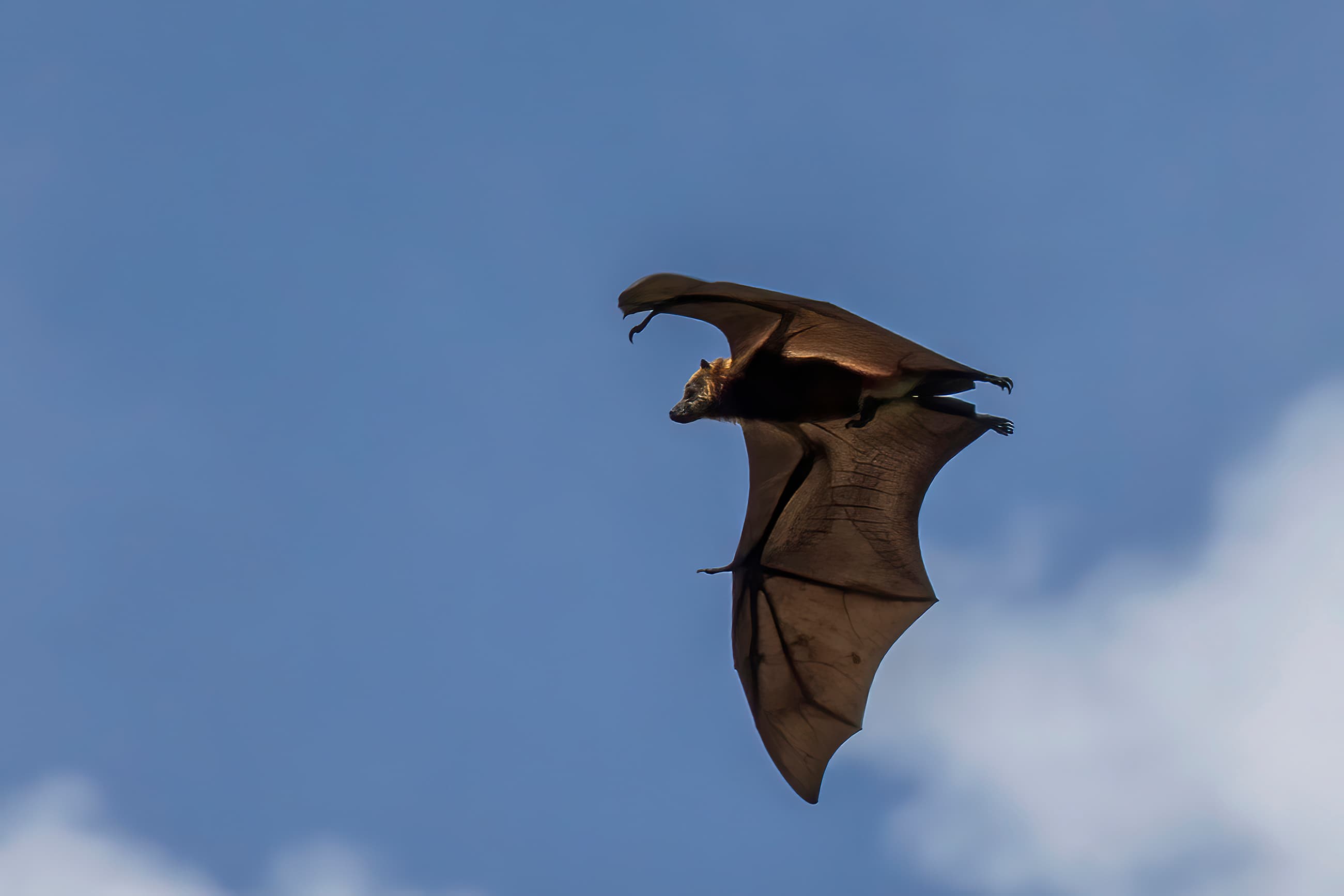
A huge bat that is the island's most important seed-spreader

A Mauritian flying fox hanging upside down in a tree, wings wrapped around its body

Photo · Wikimedia Commons

Co to jest?

The Mauritian flying fox is a large fruit bat found only in Mauritius. It has a wingspan of up to 90 centimetres - wider than most children's arm span - and hangs upside down in trees during the day. At night, it flies out to eat fruit and spread seeds across the island.

Powiedz mi więcej

Despite being called a fox, it is not related to foxes at all. It gets its name from its dog-like face, which does look a little fox-y. Flying foxes are actually megabats - the biggest group of bats - and unlike smaller bats they do not use echolocation. Instead, they navigate using their sharp eyes and a good sense of smell.

The flying fox is Mauritius's most important pollinator and seed-spreader for native trees. When it eats fruit, it carries the seeds in its stomach and drops them - sometimes kilometres away - helping forests spread and regrow. Without flying foxes, many native Mauritian trees would struggle to reproduce.

Fruit bats live in large groups called camps, which can gather in big trees and make a lot of noise. If you walk through a forested area in Mauritius and hear a loud squeaking and rustling high up in the trees, look carefully - it might be hundreds of flying foxes settling in for the day.

W klasie

Przeprowadź tę lekcję z klasą w 15 minut.

Porozmawiajcie razem

Tematy do dyskusji

  1. 01Flying foxes and tortoises both spread seeds. Why might a forest need multiple kinds of seed-spreaders?
  2. 02The flying fox looks like a fox but is actually a bat. What other animals have misleading names?
  3. 03If all the flying foxes disappeared from Mauritius, what might happen to the forests over time?
Spróbujcie tego

Zadanie dla klasy

Spread 'seeds' (small balls of paper) around the classroom by hand from one corner. Now try 'flying' them across the room by flicking them - simulating a bat carrying seeds far from the parent tree. Which method spreads seeds more widely? Discuss why distance matters for forests.