
Klasseromsleksjon · Sooty Tern · 🇳🇷 Nauru

Sooty Tern

The ocean wanderer that fills the Pacific sky

A sooty tern in flight showing its black back and white underside against a blue sky

Photo · Wikimedia Commons

Hva er det?

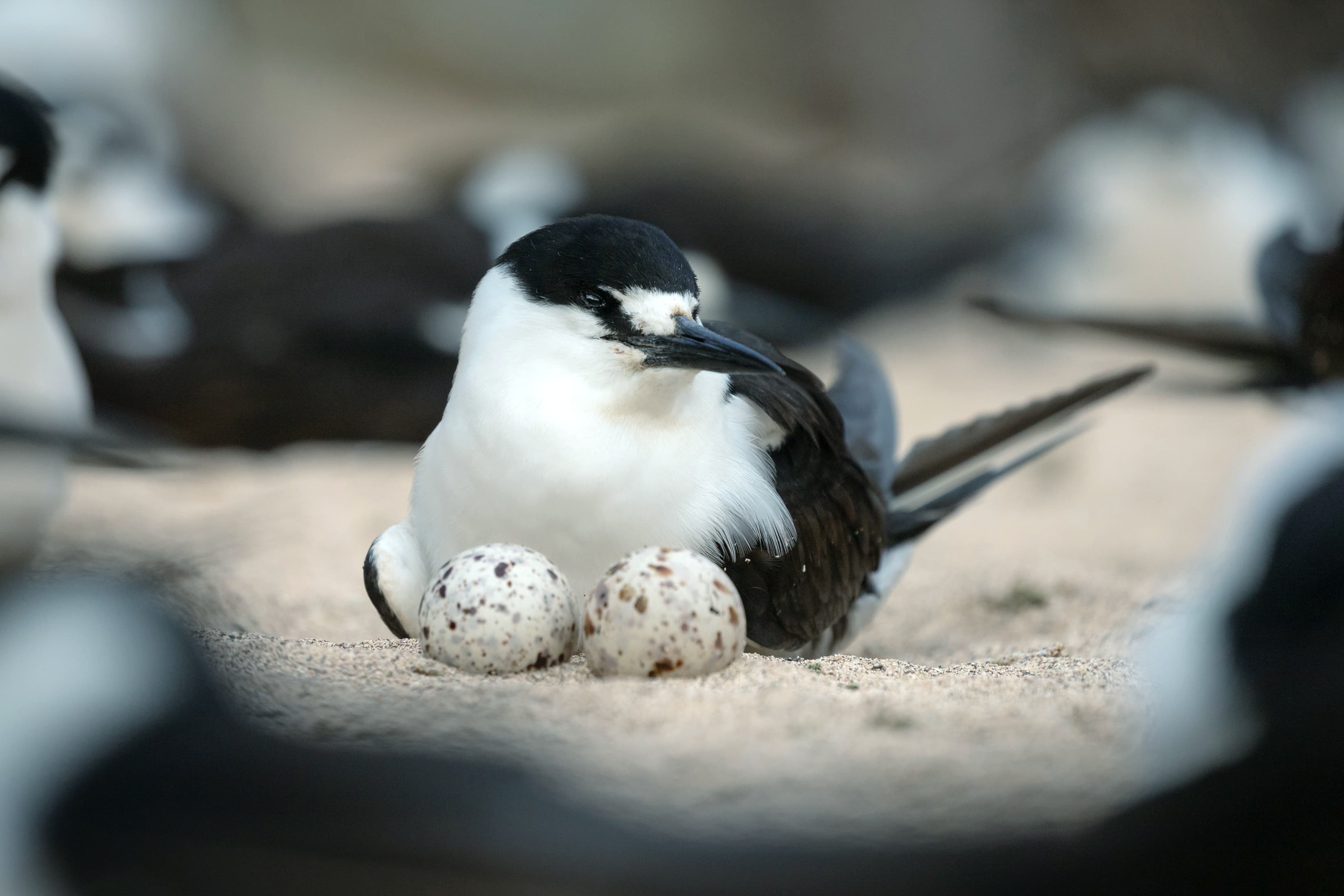
The sooty tern is a sleek, fast seabird with a black back and crisp white belly. It is one of the most widespread ocean birds on Earth, nesting on tropical islands across the Pacific and Indian Oceans. On Nauru, large flocks of sooty terns wheel and call over the coast, filling the air with their sharp, chattering cries.

Fortell meg mer

Sooty terns are built for the open ocean. They snatch small fish and squid from the surface of the water, dipping down at speed and flicking back up without missing a wingbeat. They almost never land on the water itself - their feathers are not waterproof, so they stay in the air as much as possible.

During nesting season, sooty terns gather in enormous colonies. The noise from thousands of birds calling at once can be almost deafening. Each pair lays just one egg directly on the ground or on bare rock, and both parents take turns keeping it warm.

Nauruan children grow up with the sound of seabirds as part of daily life. The terns are so familiar that islanders can often tell what kind of bird is calling without even looking up. On a small island, knowing the wildlife is part of knowing your home.

I klasserommet

Gå gjennom dette med klassen på 15 minutter.

Snakk sammen

Diskusjonsspørsmål

  1. 01Sooty terns travel thousands of kilometres but always find their way back to the same island. How do you think they navigate across the ocean with no roads or signs?
  2. 02The birds nest in huge noisy colonies. How is that similar to - or different from - the way people live in towns and cities?
  3. 03Growing up on a small island, you would know all the local birds by their calls. What sounds are part of your daily environment that you know without thinking?
Prøv dette

Klasseromsaktivitet

Listen to a recording of sooty terns (your teacher can find one online). Draw what you imagine when you hear the sound - the ocean, the flock, the island. Then listen again and add any details you missed.