
Bài học lớp học · Wildlife · 🇷🇺 Russia

Siberian Tiger

The world's largest wild cat

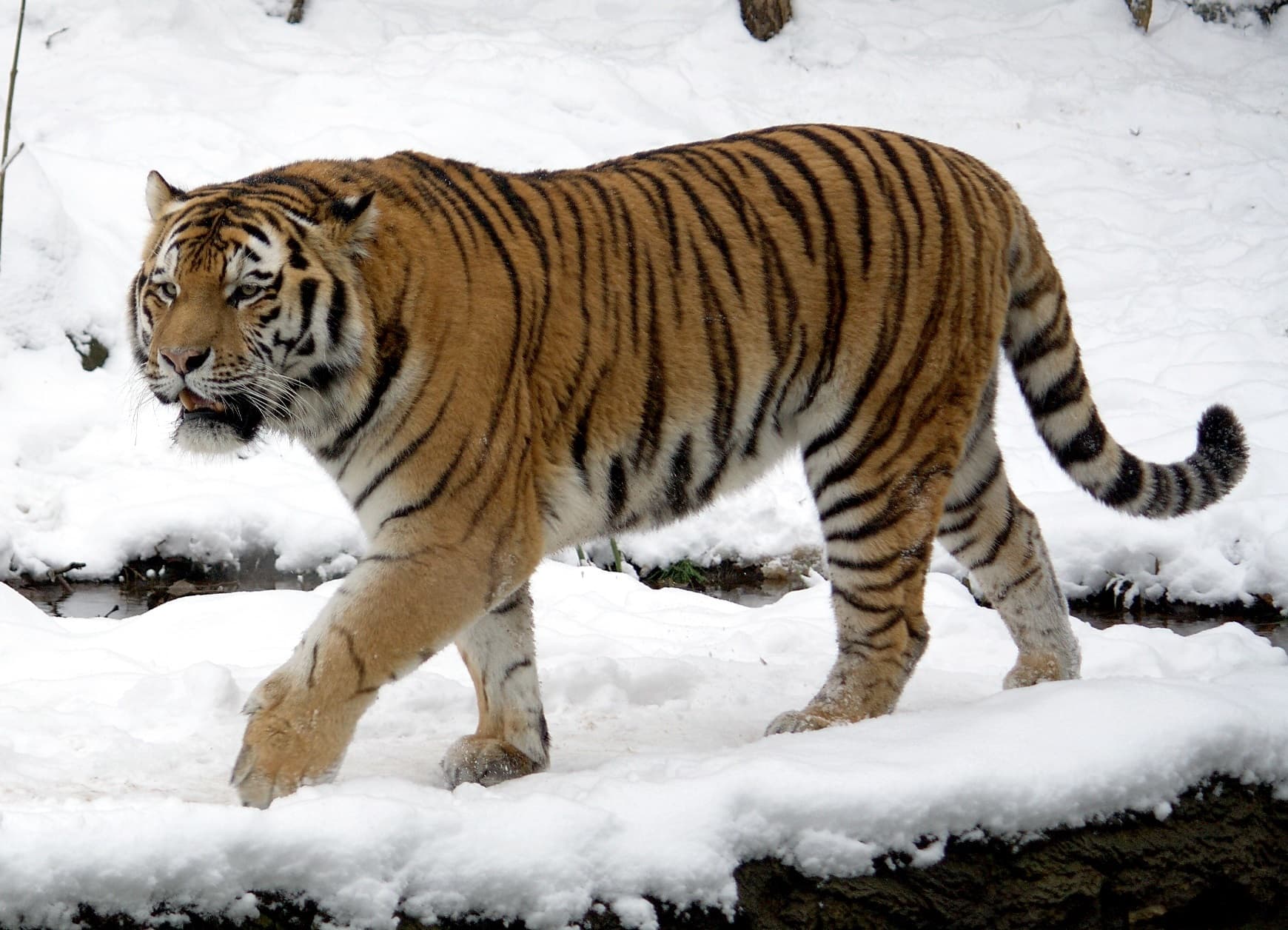
A Siberian tiger with thick orange and white fur walking through snow in a winter forest

Photo · Wikimedia Commons

Đây là gì?

The Siberian tiger - also called the Amur tiger - is the largest wild cat in the world. It lives in the cold forests of Russia's far east, near the Amur River. With its thick orange and white fur, huge paws and powerful muscles, it is built to survive in temperatures that can drop to minus 40 degrees. Each tiger needs an enormous territory of forest to roam and hunt.

Kể thêm cho tôi nghe

Siberian tigers are massive animals. A fully grown male can weigh up to 300 kilograms - heavier than three adult people - and measure nearly 3.5 metres from nose to tail tip. Their thick fur has two layers: a warm undercoat and longer outer fur to keep off wind and snow. Their paws are so wide that they act like natural snowshoes, helping the tigers pad quietly across deep snow.

These tigers are solitary hunters, which means they usually live alone. They are patient and silent when stalking prey such as deer, wild boar and elk through the forest. A tiger can leap forward up to eight metres in a single bound - about the length of a school minibus. They mostly hunt at night, using their excellent eyesight to see clearly in the dark.

Siberian tigers were once very rare because their forest habitat shrank and they were sometimes hunted. Today, careful protection has helped numbers recover and there are now around 500 wild Siberian tigers. Russia created large protected nature reserves where tigers can live safely. Scientists track individual tigers using camera traps - cameras hidden in the forest that take a photo when an animal walks past - and every tiger can be recognised by its unique stripe pattern, just like a fingerprint.

Trong lớp học

Hướng dẫn lớp của bạn qua bài này trong 15 phút.

Cùng nhau trò chuyện

Gợi ý thảo luận

  1. 01Siberian tigers live alone in huge territories. Why might a big predator need so much space?
  2. 02Scientists identify each tiger by its stripe pattern. Can you think of other animals that each have unique patterns?
  3. 03Tiger numbers have recovered thanks to protection. What else might people do to help endangered animals?
Hãy thử điều này

Hoạt động lớp học

Give each child a blank tiger outline. Ask them to design their own unique stripe pattern - no two should be the same. Lay them all out and discuss how scientists use this method in real life to tell individual tigers apart from camera-trap photos.

Tìm hiểu thêm về Russia

Những điều khác khiến Russia trở nên đặc biệt

Muốn lớp của bạn gặp gỡ Russia?

Chọn Russia khi đăng ký và chúng tôi sẽ cho bạn biết khả năng phù hợp về múi giờ.

Register your classroom