
Lezione per la classe · Wildlife · 🇹🇿 Tanzania

The wildebeest

1.5 million of them - the stars of the Great Migration

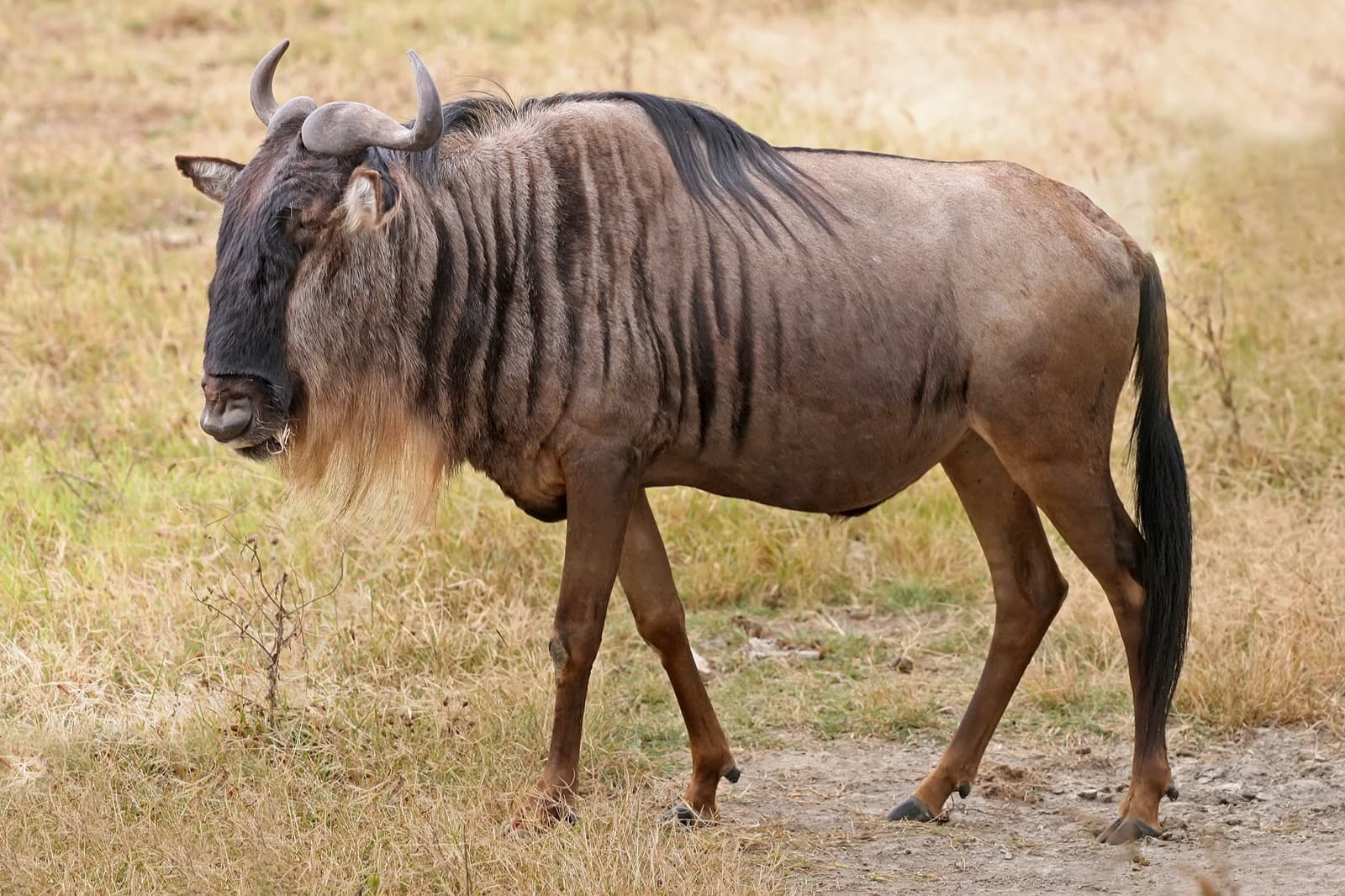
A wildebeest standing on the open Serengeti plain

Photo · Wikimedia Commons

Cos'è?

The wildebeest is a large grazing animal with curved horns and a thick beard under its chin. It lives in huge herds on the Tanzanian plains. There are around 1.5 million wildebeest in the Serengeti - more than the human population of many cities - and they all travel together every year in the Great Migration.

Saperne di più

Wildebeest look a bit like a mash-up of several animals. They have the head of a buffalo, the body of a horse, a beard like a goat, and a tail like a donkey. People sometimes joke that they were 'put together from spare parts'. The Afrikaans name 'wildebeest' means 'wild beast'.

A newborn wildebeest is one of the fastest baby animals in the world. It can stand up within minutes of being born and run alongside its mother within an hour. It has to: in the open Serengeti, predators are never far away, so even tiny calves need to be ready to move.

Wildebeest follow the rain. When the grass in one place gets short, the whole herd starts walking to find better grass somewhere else. They take turns sleeping - some always stay awake on watch - and they 'talk' to each other in soft grunts and snorts. From a distance, a big herd sounds like rolling thunder.

Even though wildebeest are everywhere in the Serengeti, scientists are still learning new things about them. How do they all decide to start walking on the same day? Nobody knows for sure. Researchers think it's a mix of smell (rain on grass in the distance), sight (other wildebeest starting to move), and instinct passed from parent to child.

In classe

Lo presenti alla classe in 15 minuti.

Parlatene insieme

Spunti di discussione

  1. 01Wildebeest babies have to stand and run almost immediately. What other animals do this? Why?
  2. 02If you were starting a huge journey with friends, how would you all agree on when to leave?
  3. 03Wildebeest live in giant herds and humans live in cities. What is similar about those two ways of living?
Da provare

Attività in classe

Stand the whole class in a tight group on the playground (this is the herd). One person starts walking very slowly in one direction. How long before everyone else notices and starts to follow? Try it without anyone allowed to speak. Talk about how the wildebeest might decide together without words.