
Lekcja klasowa · Music · 🇺🇿 Uzbekistan

The dutar - a two-string Uzbek lute

A wooden instrument that has been played for centuries

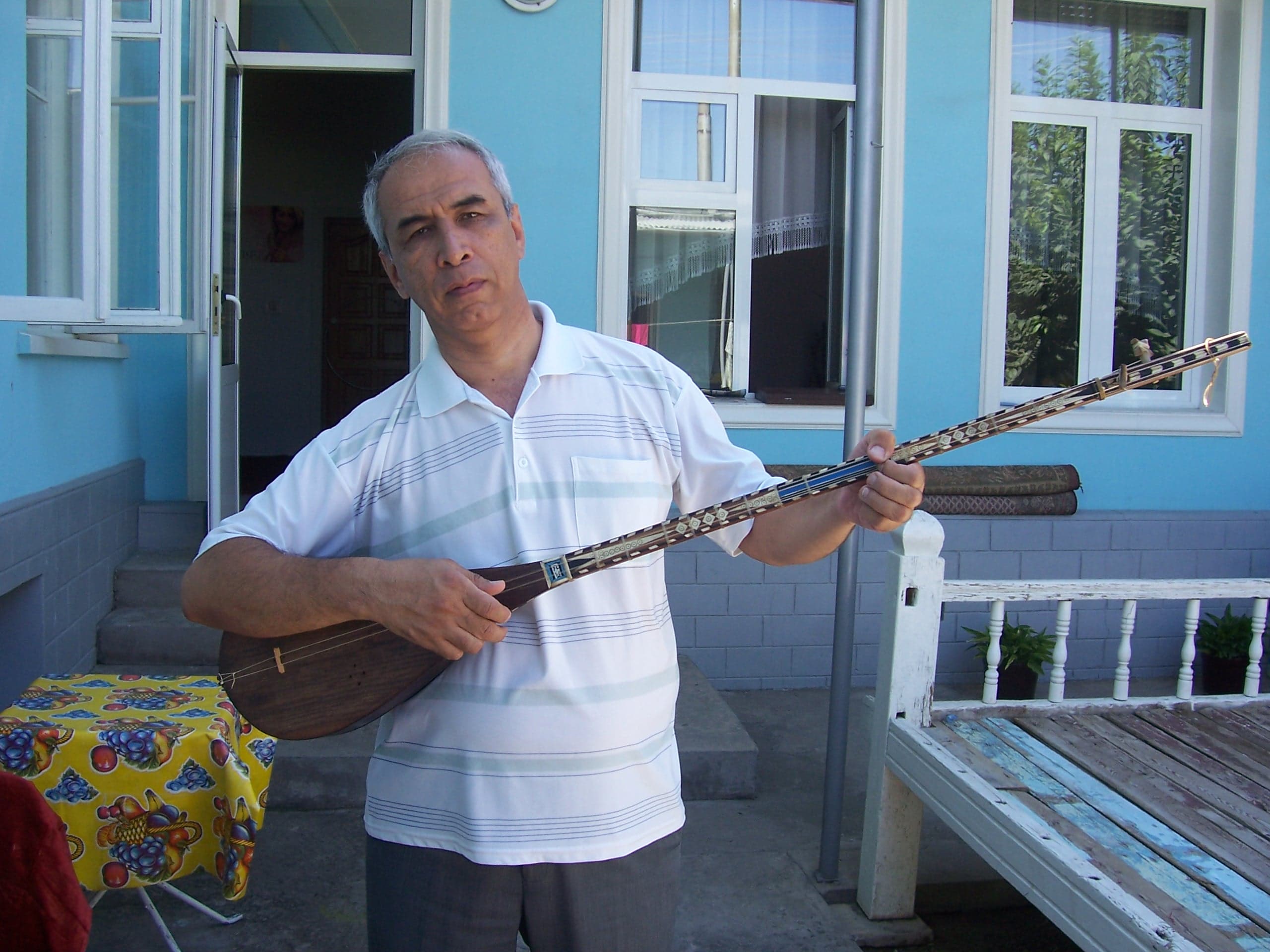
A traditional wooden dutar lute with a long neck and a pear-shaped body

Photo · Wikimedia Commons

Co to jest?

The dutar is a traditional Uzbek instrument that looks a little like a long-necked guitar. It has only two strings (in Persian, 'do' means two and 'tar' means string), and it is made entirely of wood. Its sound is gentle and a bit dreamy, perfect for telling stories with music.

Powiedz mi więcej

The dutar has a pear-shaped body and a long, slim neck. The body is carved out of mulberry wood, which is light and resonant. The strings are usually made of silk - the same silk that travelled the Silk Road - so the dutar is, in a small way, made of the road itself.

Players pluck and strum the two strings with their fingers, not a pick. Even though there are only two strings, an experienced dutar player can make a huge range of sounds - happy, sad, fast, slow. Some traditional songs go on for half an hour, telling a long story with only the dutar and a singing voice.

Children in Uzbekistan often learn the dutar at music school. It takes a long time to be good - the fingertips get a bit sore at first - but most learners say it is a calming instrument to play. You can sit cross-legged on a cushion, hold the dutar lightly across your lap, and let the music flow.

The dutar is part of a wider Central Asian musical tradition called Shashmaqam, which means 'the six maqams' or 'the six modes'. Shashmaqam is a kind of classical music with old, careful patterns. UNESCO has added it to its list of important world traditions, because it has been kept alive for hundreds of years.

W klasie

Przeprowadź tę lekcję z klasą w 15 minut.

Porozmawiajcie razem

Tematy do dyskusji

  1. 01What might a two-stringed instrument do well that a six-stringed one cannot? And the other way around?
  2. 02The dutar can tell stories that last half an hour. Could you listen to one song that long?
  3. 03Is there a musical instrument from your family or community you wish more people knew about?
Spróbujcie tego

Zadanie dla klasy

Make a 'mini dutar' from a tissue box and two elastic bands stretched over it, with a pencil under the bands for a bridge. Pluck one and then the other. Discuss as a class: how is the sound changed by the length, tightness or thickness of the band?