
Unterrichtsstunde · Music · 🇵🇪 Peru

Andean panpipes

The mountain music made by blowing across a row of tubes

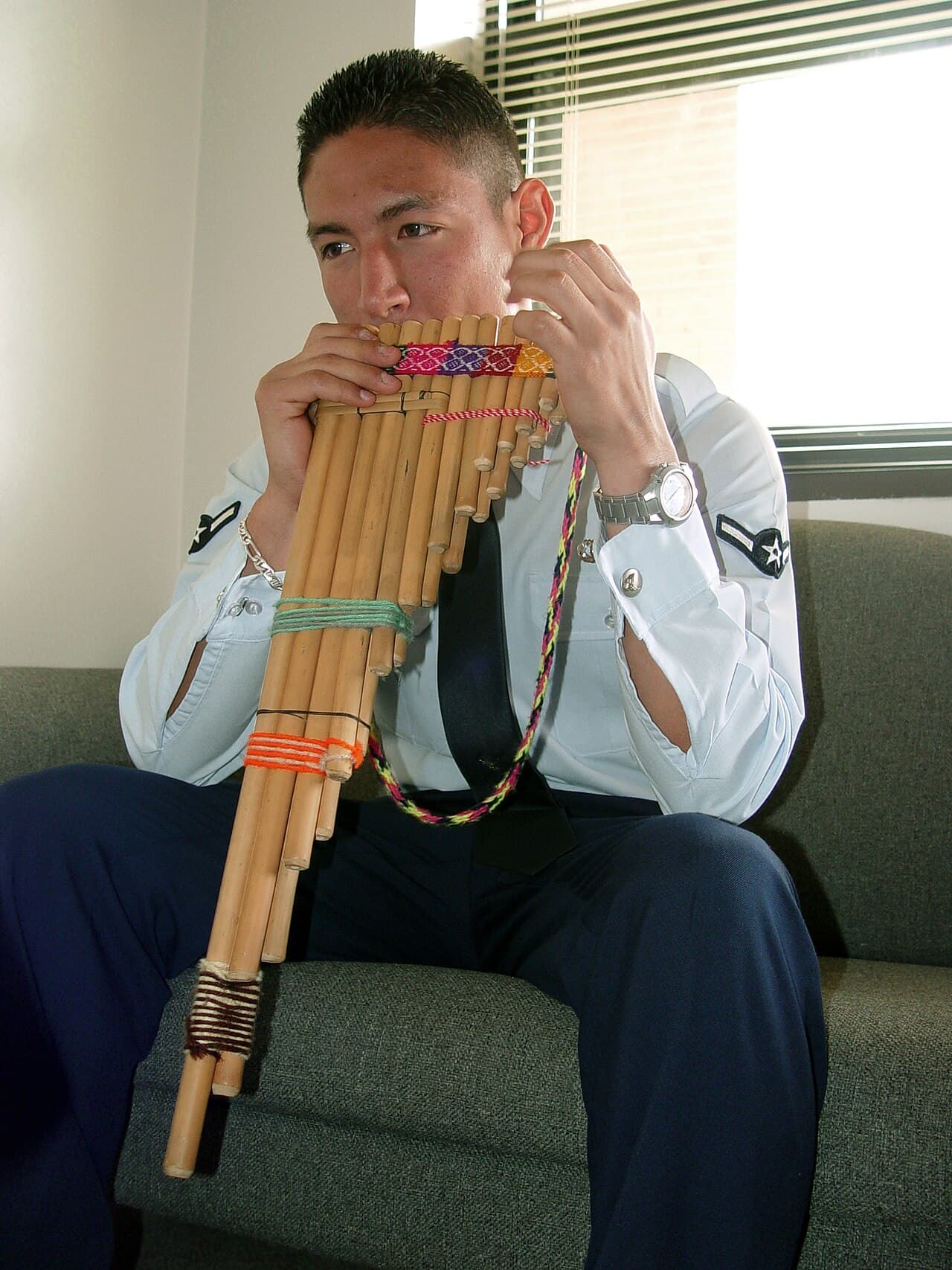
A musician holding a set of Andean panpipes to play

Photo · Wikimedia Commons

Was ist das?

Andean panpipes are an instrument made of several hollow tubes of different sizes, tied side by side. When you blow gently across the top of each tube, it makes a soft, breathy note. The panpipes of Peru and Bolivia are called zampoñas or sikus, and they have been played for thousands of years.

Mehr erfahren

Each tube of a panpipe is closed at the bottom and open at the top. The longer the tube, the lower and deeper the note. So a row of different-sized tubes gives you a whole scale of notes - low ones on one side, high ones on the other. The bigger the panpipe, the deeper the sound.

Andean musicians often play in pairs. One musician has the odd-numbered notes; the other has the even-numbered notes. To play a tune, they take turns - back and forth - blowing their own notes at exactly the right moment. It only works if they listen carefully to each other.

The panpipes are often played together with a small wooden drum called a bombo, and a tiny stringed instrument that looks like a half-sized guitar called a charango. Together they make the soft, soaring sound that Peruvian and Bolivian mountain music is famous for.

You can make a simple set of panpipes from drinking straws. Cut several straws to slightly different lengths, tape them in a row, and blow gently across the top. The longer ones sound deeper. It is one of the simplest instruments humans have ever invented - and one of the oldest.

Im Unterricht

In 15 Minuten mit Ihrer Klasse durchgehen.

Gemeinsam sprechen

Impulse für das Gespräch

  1. 01Why might musicians have invented an instrument you can play with just your breath?
  2. 02What does it teach you to play music with a partner instead of alone?
  3. 03What instruments come from where you live? How are they different from the panpipes?
Probiert das aus

Aktivität für den Unterricht

Class panpipe build. Each pupil cuts 5-7 plastic straws to different lengths and tapes them in a row. Take turns blowing across the tops. Can the class organise themselves so that, in a circle, the straws together make a full scale - low to high? Try a simple tune together.